
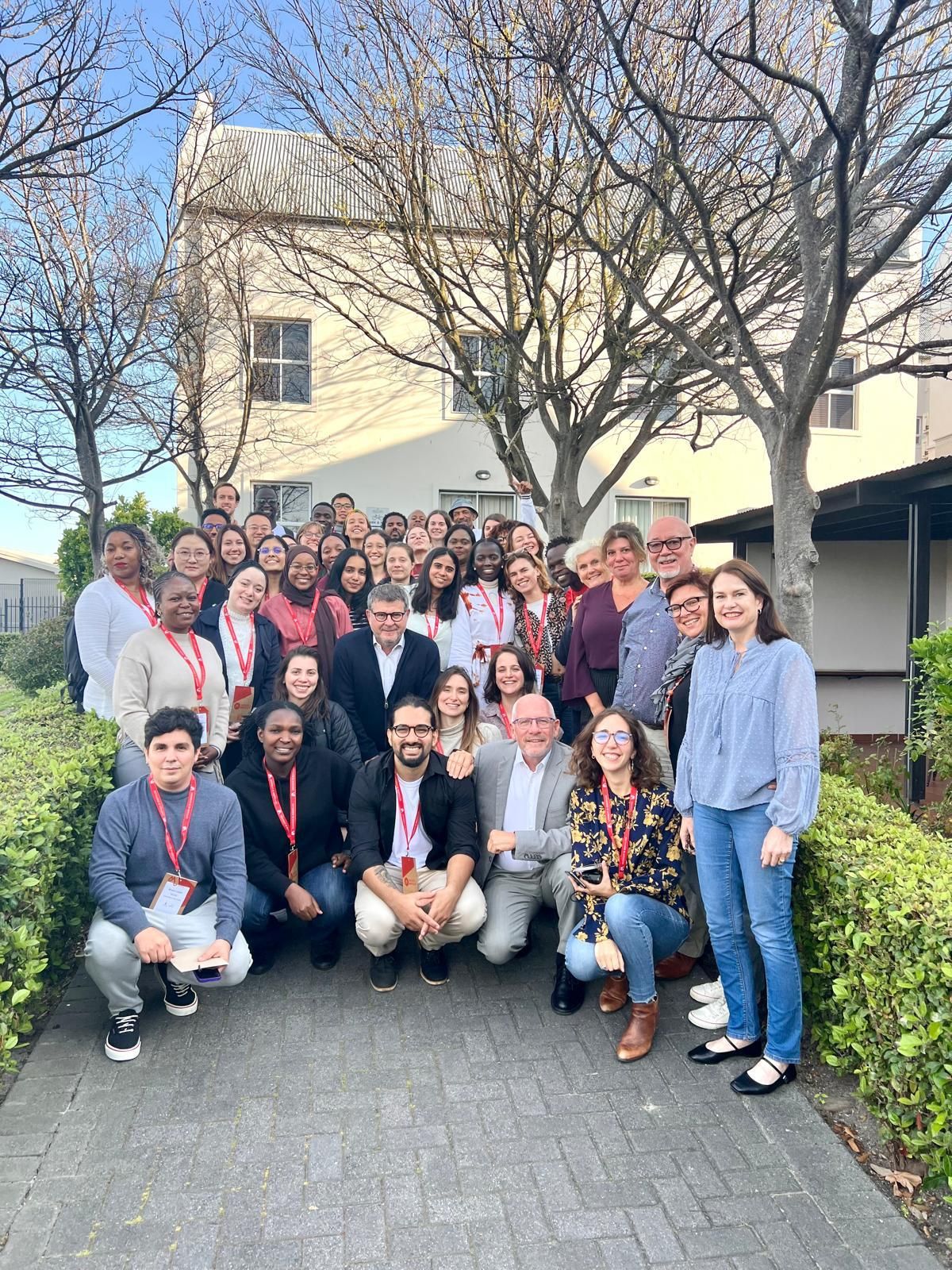
Feed, Protect, and Care: Third Training Session of Global PhD Collaborative in SA
With only five years remaining to meet the 2030 Sustainable Development Goals, the latest Global Sustainable Development Report paints a concerning picture. Progress is inconsistent, and without immediate corrective measures, the world faces ongoing crises related to poverty, inequality, and climate disruptions.
Professor Frans Swanepoel, the Future Africa Research Chair in Sustainable Food Systems at the University of Pretoria (UP), highlighted these challenges. He spoke during the launch of the third training program hosted by the Feed–Protect–Care Global PhD Collaborative Platform in Cape Town, South Africa, from September 8-17, 2025.
The Feed–Protect–Care Platform, created through a partnership between UP and the University of Montpellier (UM), aims to connect PhD students worldwide. It enhances sustainability science skills, strengthens research networks, and equips emerging researchers to drive transformative changes.
Building on a Global Series
The Cape Town training is part of an ongoing series that began in 2024, featuring earlier sessions in Montpellier, France, and São Paulo, Brazil, where doctoral candidates examined global nutrition and food system issues.
This third program welcomed a diverse cohort of 22 PhD students representing 13 universities across 16 nationalities. Under the expert guidance of Prof Swanepoel, Prof Karen Lambert, and a team of specialists, including Dr. Melody Mentz-Coetzee and Dr. Elizabeth Mkandawire, participants tackled critical topics, such as:
– How should academic institutions redefine their roles to foster change?
– What metrics should be used to gauge and reward research impact?
– In what ways can food systems science act as a catalyst for transformative change?
Symposium and Peer Learning
On September 11, the training expanded to include a second cohort of 29 PhD students, with 21 participating in-person and 8 online. During a two-day symposium, the first cohort presented collaborative outcome papers while the second cohort introduced their individual research projects, facilitating peer learning and collaboration between groups.
The remaining days combined structured discussions with hands-on learning. Noteworthy activities included a networking event with students from the UKUDLA Summer School, a G20 contextualization session, and a Food Imbizo focused on transforming African-led food systems. Participants also took part in site visits to the Cape Town Market and Steenbras Dam Waterworks, and enjoyed a cultural tour of the historic Bo-Kaap neighborhood.
Going Beyond Silos
In concluding the program, Prof Swanepoel reiterated a key message from the 2024 World Science Forum Declaration, calling on the international scientific community to enhance efforts in producing credible knowledge and practical solutions. He emphasized, “Funding, interdisciplinarity, and partnerships are essential—but when pursued in isolation, they often fail to bring about meaningful transformation.”
This overview reflects insights shared on LinkedIn by ARUA-SFS and the UM–UP Feed–Protect–Care Global PhD Collaborative Platform.
What steps do you think we can take to drive the necessary changes in global food systems?


